
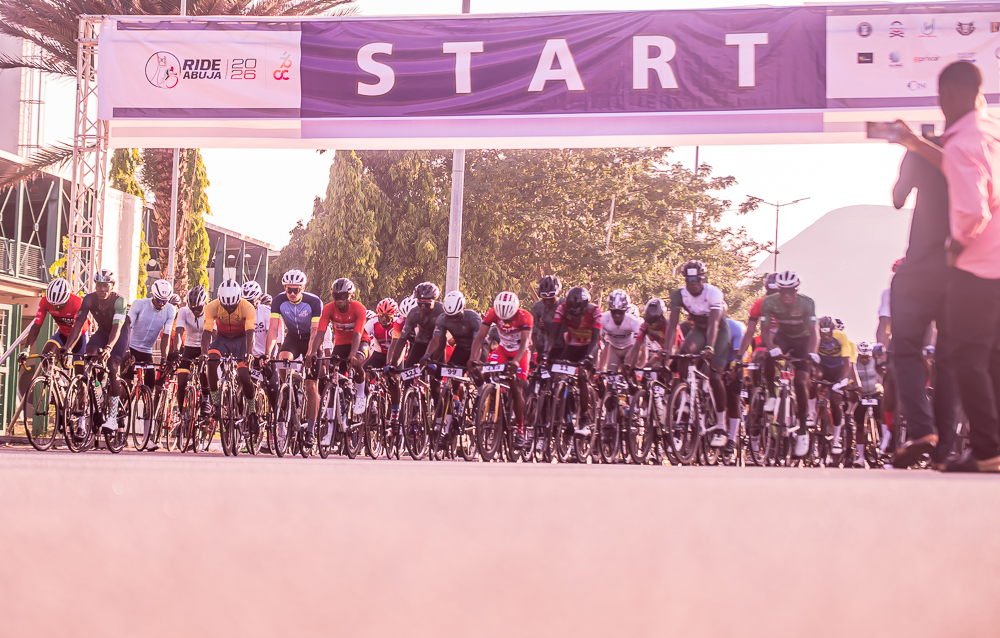
Nigeria’s ambition to compete more strongly in international cycling is drawing attention to the need for more competitions and safer roads for riders.
The Cycling Federation of Nigeria says it plans to explore turning the inaugural Ride Abuja race into a national championship, potentially creating more opportunities for Nigerian cyclists to earn international ranking points.
The 87-kilometre race, organised by 76 Cycling Club Abuja Roadies on 4 October, attracted professional and recreational cyclists from Nigeria and abroad.
Federation Eyes National Championship
The federation’s Technical Director, Mohammed Basheer, says developing the event into a national championship could help riders gain competitive experience and improve their chances of qualifying for major international competitions, including the World Championships and Olympic Games.
Godstime Cyril Umosen of Team Subsea won the professional men’s race in two hours, one minute and 18 seconds. Osaretin Godwin of Team Edo won the women’s category in two hours, nine minutes and 11 seconds.
Basheer also urged cycling clubs and corporate organisations to organise more competitions to widen participation and strengthen the sport.
Road Safety Remains a Major Challenge
Participants say the growth of cycling in Abuja depends partly on whether roads become safer for people who use bicycles.
German cyclist Marcus Wenz identified damaged roads, missing drainage covers, heavy traffic and the attitude of some motorists as major hazards. He also said he had previously been knocked over while cycling in the city.
The federation’s Secretary-General, Joel Akinuwa, acknowledged the infrastructure challenges and said the federation was willing to provide technical support for cycling events. He said the Abuja race had security, medical and traffic-management arrangements.
The event also demonstrated cycling’s accessibility to people with disabilities. British High Commission staff member Ian Atfield completed the course using a recumbent handcycle. He said motorists were generally respectful but that he preferred riding when roads were quieter.
Cycling coach Dr Samaila Usman said organised races could help identify talent and develop athletes from grassroots participation to elite competition. He urged aspiring cyclists to join clubs, while recreational rider Hamza Abubakar advised beginners to start gradually, noting that the sport could be demanding and expensive.
Organisers intend to make Ride Abuja an annual event. Turning it into a national championship, however, will require sustained organisation, broader participation and support from relevant authorities and sponsors.
The race has provided a platform for competition. The next challenge is to build on that momentum and create conditions in which more Nigerians can take up cycling and progress to higher levels.